

Okay, heads up, this is a tricky one. There’s a secret, little-known alternate position for the object in a Chinese sentence. It’s after the subject and before the verb. At the moment, we probably know of the following positions for the object:
作者存档:安天老师
Tips Miniseries (8/9): Duration Structure
I can’t tell you how many times I see students get their duration structure in a pickle – even advanced students seem to get this wrong quite often. By duration structure, I mean when you want to say how long an action was done for e.g. ‘I watched Korean dramas FOR 3 HOURS.’
Tips Miniseries (7/9): Topic-Comment Structure

A distinctly Chinese sentence structure is the TOPIC-COMMENT STRUCTURE. This is a structure that some of you will have heard of, some will have practiced and others will have never heard even once. For those Chinese learners who have heard of it, they nonetheless often avoid using it, because it is one of those structures that seems fairly unusual relative to how we phrase our thoughts as English-speakers.
Tips Miniseries (6/9): Slashing the ‘是’

In the same way that English-speaking students often use too many repeated pronouns in their Chinese sentences (see back to tip #4), which makes their Chinese sound rather verbose and as if it has been sautéed in a glaze of ‘English’, students also have a marked tendency to often use too many 是 in their sentences.
Tips Miniseries (5/9): Where to put ‘what’

Do you know the rule for where question words like 什么、谁、哪里、怎么 etc. go in the sentence? It’s amazing how far through the Chinese subjects students can get at university and still be quite unaware of how to work out exactly where these question words go. This important rule is, in fact, not even that often stated in textbooks. So, what is this magic rule?
Tips Miniseries (4/9): Keep Your Pronouns to Yourself, Please
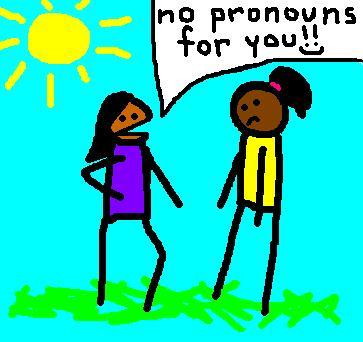
As you are probably aware, Chinese very much likes to avoid repetition of information that has already been made clear from the context – particularly pronoun words like 我 I, 你 you and 他 he / 她 she. Many English-speaking students, however, copy their English a little too literally into their Chinese and excessively pepper their sentences with superfluous 我、你、他 and 她s.
Tips Miniseries (3/9): Aspect Marking of the MAIN Verb Only
Chinese aspect-markers like 了、过 and 着 show the temporal relation an event has to the time-period you are talking about. However, unlike tense-marking on English verbs, where we obligatorily mark each verb with the appropriate tense (-ed, -t, -en, -ing etc.), Chinese has a tendency to ONLY put aspect-markers after the MAIN verb of the sentence – regardless of their ‘tense’.
Tips Miniseries (2/9): 嗯
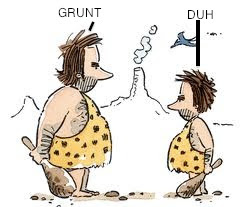
If you want to truly sound like a CHINESE Chinese, there’s no getting around it, sooner or later you are going to have to learn to grunt. The truth is, rather than using 是, 对 or the verb of the question, one of the most common ways to respond to a statement or question is to simply say (though I think ‘say’ is pushing it) 嗯 ng or 啊 a (the latter with varying intonations, depending upon the circumstance). To Anglos, this can feel a little too ‘primitive’ or ‘impolite’,…
Tips Miniseries (1/9): Rude Politeness

Less of the 请, less of the 谢谢, less of the 您贵姓 – please! A really ‘foreign’-sounding feature of English-speakers’ Chinese is the excessive politeness – it tends to be over-seasoned with ‘polite’ expressions like please and thank you. Whilst, to the English palate, this seasoning – whether used with friends, strangers, superiors, or even our own family – is pleasant to the taste, to the Chinese palate, it’s taste is somewhat vapid.
Tips Miniseries: 9 More Tips to Make Your Chinese More Authentic
Hey all! In a previous post, I gave you 5 fairly simple ways in which you can make your Chinese sound more natural and less ‘foreign’. In this miniseries of posts, I’m continuing with this theme and giving you another 9 tips, each with some more in-depth discussion. Some of them have intermediate learners in mind, but no matter what your level – either higher or lower, there’s still a lot of useful stuff here. Enjoy 🙂
 中文秘诀 | The Secret of Chinese