
Whereas in English, the meanings of verbs tend to come from the sorts of objects involved and the desired result of the action, Chinese verbs tend to define a different kind of prototype, or template, to which actions of various different types can be matched, even though they seem in our ‘English mindset’ to be very different, unrelated kinds of events.
作者存档:安天老师
‘Me and You’ or ‘You and Me’?

A quick one for today. The other day I heard an Indonesian Chinese speaker refer to her (paternal) grandparents as “奶奶爷爷”. This immediately struck my ear as strange, as it’s usually said as “爷爷奶奶”. It then got me thinking about how it’s funny that languages tend to have fairly fixed order for what sounds most natural with ‘A and B’ sorts of noun-phrases.
Chinese Learner’s Checklist: 10 Things Everybody Gets Wrong
As a Chinese teacher, over the years I’ve come to see that there are particular topics and language points that students seem to have a ‘mental block’ with, to the point now where I can usually predict in advance which particular content will prove to be a stumbling block with most students. In this post, I want to give you a quick checklist of some of those, so you can make sure that you are okay with them.
土澳 Tǔ’Ào – Affectionate Pet Name or Derogatory Slur?
Okay, so I’ve got a bit of a bee in my bonnet (so unlike me, I know…) and I need your help. It’s about a Chinese-related issue. It’s the way Chinese people refer to Australia in Chinese. Nowadays, lots of people, rather than using the standard word for Australia – which is 澳大利亚 Àodàlìyà, use a more recently coined term “土澳” Tǔ’Ào. I have a sense that this word is at its roots, not entirely respectful, but is perhaps so widely used that Chinese people have lost a sense of this. Interestingly, this then sparked an argument with a good Chinese friend of mine and I’m eager to get an outsider’s take on the issue (particularly if you don’t speak Chinese).
‘Cutesy’ Chinese: The Art of 撒娇
I haven’t posted in a while, because life has been super-hectic. Like I’ve been promising for a while, I have several posts in the works that I hope to bring to you soon-ish. To tide you over for now, I thought I’d try and write a post about something that I mentioned to a student the other day – how to sound ‘cutesy’ in Chinese.
Fun: Ambiguity
I love the ambiguity in this picture. It’s from the cover of a book called ‘the unhelpful travel guide’. There’s lots of ambiguity about where to draw the word-breaks, making the sentence possibly mean several different things (hence the title itself is ALSO unhelpful!).
Fun: Hakka Dialect Possessive Pronouns
If you ever wanted to learn Hakka dialect (客家话) from a Jamaican man, here’s your chance!!
How Chinese, Japanese and Korean Numbers Sound the Same
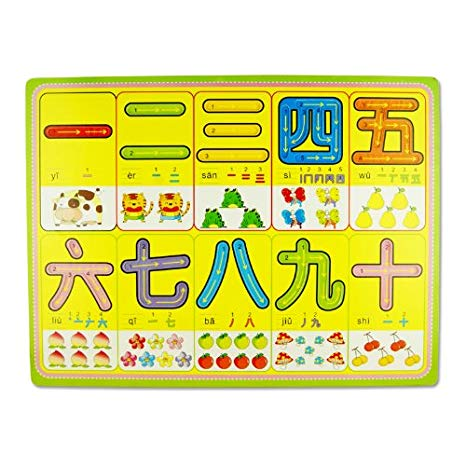
Hi guys! 好久不见! I thought I’d tide you over with a short(-ish) little (long) post about Chinese numbers that should quench your thirst for all things linguistically oriental. As some of you know, I’ve been getting into Shanghainese recently. As I was poring over my Shanghainese book (as one does on a Saturday afternoon), I was quite taken aback with how much similarity there is between Shanghainese and Japanese pronunciations of the numbers…
Like or not? Like! Like then buy! Not buy – where have money?? Regardless have or not, like then buy.
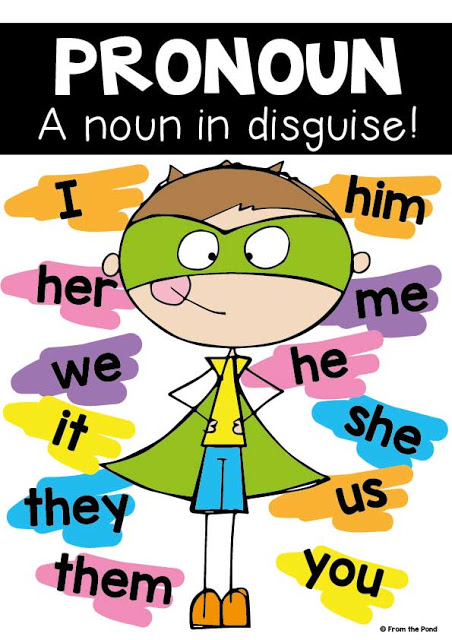
I’m pretty pleased with the title ^_^, haha. Today I want to talk about one of the key things that makes students’ Chinese sound UN-Chinese, which is anaphora & coreference – two phenomena which are exhibited by my strange title for this post.
10,000 Steps & Wishes (Plus a little bit of linguistic determinism)
A quick fun fact for the day. There is actually NO evidence whatsoever (at least, the last time I read about this) that 10,000 steps is what humans should be striving to achieve each day in terms of exercise.
 中文秘诀 | The Secret of Chinese