
I’m pretty pleased with the title ^_^, haha. Today I want to talk about one of the key things that makes students’ Chinese sound UN-Chinese, which is anaphora & coreference – two phenomena which are exhibited by my strange title for this post.
These certainly do at immediate hearing sound like lofty and technical linguistics terms, and whilst they are, I want to assure you that what they actually refer to is fairly straightforward and also very relevant to use of language / language learning in general, but particularly so for Chinese, which is characterised by a lot of ‘doesn’t happen in English’ phenomena that these terms cover (you may now have realised that this post’s title is actually a literal English translation of Chinese).
I’m dividing this post up into 2 parts: part 1 is going to be a quick introduction to the relevant linguistic concepts and will explain them using English examples; part 2 will be where we apply this knowledge to Chinese and see how we can use it to express ourselves in a more ‘naturally Chinese’ way.
PART 1: What are anaphora, coreference & pronouns?
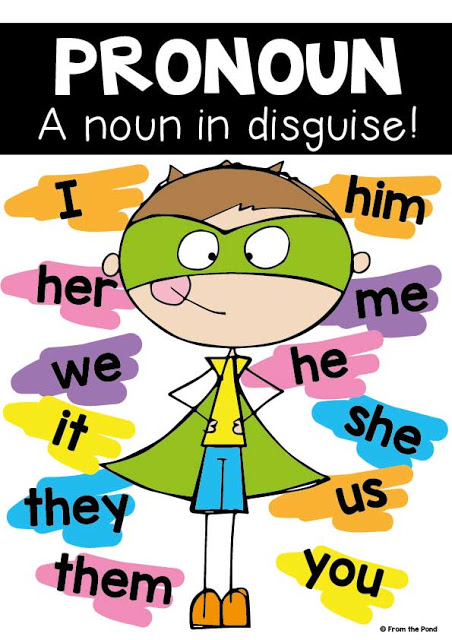
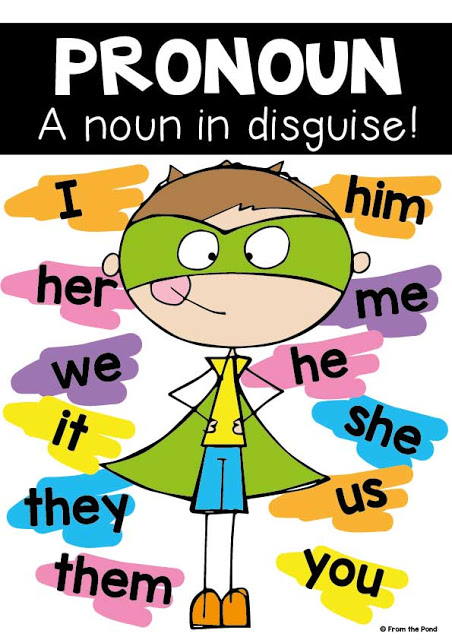
So let’s start at the beginning. At the basic level, anaphora & coreference are concerned with pronouns. Now, I believe that the majority of people have in fact heard of a pronoun, but I’m not too sure how many I’d actually trust to tell me what one is! The word ‘pronoun’ in fact is made up of two elements – noun and pro– [I’m sitting here desperately hoping you know what a ‘noun’ is, but don’t worry if you don’t – just Google it or search it on Wikipedia. That’s what I did. Before starting my PhD, I’d never learnt anything formally about linguistics – I just came across stuff and would look it up to find out what it means (then later I found out that this, broadly speaking, is called ‘research’ – lol)]. So a pronoun is still a kind of noun. The pro- part is the most interesting, because it’s short for ‘pro–form’ – yep that’s right, nouns are not the only type of word that can be ‘pro-ed’, there’s such a thing as pro-verbs (not to be confused with ‘proverb’ meaning ‘a type of idiom’), pro-adverbs and much more.
Pro-forms are in general, all kinds of words that are used to refer to ANOTHER word in the context. At first this sounds a bit technical, but in fact, it’s crucial to how language works. Below, I’m going to give you an example of some English without any pro-forms used and you can get a sense of how wordy this makes the language. The example below is also going to not have much / any use of coreference – a great word that makes you sound intelligent when you say it, but which simply means something like ‘not making the relationships between certain words in the context completely explicit, but sometimes allowing common-sense logic and other linguistic devices to imply those relationships instead’ – in a nutshell, ‘linking words together without redundant repetition’. Okay, so let’s get a feel for what non-pro-form, non-coreferring English would sound like (*WARNING*: will hurt head profusely – consider wearing helmet):
John is my best mate. John once got into trouble at school for stealing a book, but John getting into trouble at school for stealing a book was not as John getting trouble at school for stealing a book seemed, because John in fact was not the person who took the book. The person who stole the book was actually John’s friend who took the book and John’s friend who took the book was in the library. ‘A terrible thing, you have stolen the book!’, said John in the library when John saw John’s friend who had stolen the book from the library in the library. However, at the end of the situation where John’s friend had actually stolen a book from the library and John was being blamed for having stolen a book from the library, whilst the situation was that John’s friend had stolen the book from the library, John was the human being who took the blame for the situation of John’s friend having stolen the book from the library.
Okay – that was excruciating! Now let’s take a look at how we’d say this in a much more typically ‘normal’ way, where we don’t avoid the use of pro-forms and coreferring devices:
John is my best mate. He once got into trouble at school for stealing a book, but things weren’t as they seemed, because he in fact didn’t do it – it was actually his friend in the library. ‘What are you doing!’, John said when he found him there. However, in the end, whilst it was his friend who’d done it, it was John who took the blame.
Clearly, not only is the second version much shorter, but crucially, its logic is 100 times easier to follow and it simply ‘makes more sense’. I would even bet that for the majority of people, the first version would actually be basically incomprehensible if somebody were to say it to them face-to-face. Let’s take a quick look at some of the ways in which the second version was able to work (apologies, I know this is a long and technical pre-amble, but it’s really going to help you understand what’s going on in Chinese in a bit).
– instead of repeating ‘John’ every time, we often use he instead after the first mention (we say that he is coreferential, or corefers with John; he is a pronoun i.e. a pro-form that can replace a noun [‘John’ being a noun])
– likewise, we used possessive pronoun ‘his’ when we referred to John’s friend, otherwise we would have to keep repeating the word ‘John’ all the time (and I have a suspicion that pro-forms are used to reduce cognitive load, as each time we hear a name mentioned in the discourse, we ‘take note’ more as it will usually be a newly mentioned person)
– we used generic words like ‘things’ and ‘it’ to refer to the specific situation we have mentioned, rather than repeating ‘stealing a book’ each time
– instead of repeating ‘steal’ each time, we use the verb ‘do’, which is very generic and ‘plain’ in meaning, essentially able to stand in for any other verb (hence it is a PRO-verb)
– observe that when we said ‘it was actually his friend in the library’, we in fact were able to completely omit ‘his friend in the library [who stole the book]’ because the context made it clear
– we used ‘what’ and ‘doing’ in ‘What are you doing!’ to replace all the information of the situation that’s actually going on
– we used ‘there’ to refer to ‘the library’
– ‘in the end’ was implied to mean ‘in the end [of the situation where John had been blamed for his friend having stolen a book]’ i.e. it was coreferential with the situation being discussed. Likewise, ‘the blame’ is assumed to mean ‘the blame [for the situation at hand]’.
PART 2: How this works in Chinese
Finally, we’re here! At the Chinese-relevant part. Glad you made it (and I just KNOW you didn’t skip ahead to here…did you??……DID YOU???!)
Okay, drama aside, anaphora and coreference DON’T WORK THE SAME IN CHINESE AS THEY DO IN ENGLISH (probably not much of a shock…you likely expected we were going to end up at this point). And because these phenomena don’t work the same, you need to actively think about and learn where the differences lie. Unfortunately, even though these differences can affect correct phrasing in the most simple, basic, beginners’ sentences, as I often find myself saying on this blog, “it don’t get discussed nowhere much” (actually, I don’t say that; I fear the Grammar Gods too much).
A good place for us to start is with the title, which if you can’t recall, is:
Like or not? Like! Like then buy! Not buy – where have money??
Regardless have or not, like then buy.
As I mentioned earlier, this is in fact a literal English translation of a short Chinese conversation in a shop between two friends, where one of the people is urging their friend to just buy the thing they like. Let’s translate the convo into Chinese and then see what’s happening:
[In a shop; Person B is looking at an item they like]
A: 喜不喜欢?
      Xǐ bu xǐhuan?
      Literally: Like or not?
B: 喜欢。
      Xǐhuan.
      Literally: Like.
A: 喜欢就买吧。
      Xǐhuan jiù mǎi ba.
      Literally: Like then buy.
B: 不买——哪有钱?
      Bù mǎi——nǎ yǒu qián?
Literally: Not buy – where is there money?
A: 不管有没有,喜欢就买呗。
      Bùguǎn yǒu-méi-yǒu, xǐhuan jiù mǎi bei.
       Literally: Whether have or not, like then buy.
It’s easy to see how for the student, one could easily get lost in all the coreferences and implied links in the conversation. I remember when I was in the earlier stages of learning, I often found myself in a situation of understanding all the words, but not having a clue of what’s actually being referred to. Thankfully, I later realised that it’s because of all this omission of redundant / repeated words and logically implied contextual links that Chinese does that’s why I felt this way. It’s also why it’s notoriously difficult to eavesdrop on a random Chinese conversation and know what’s being said – don’t worry, I eventually came to realise that even Chinese people often couldn’t do this if they had not been listening at the start of the conversation where all the necessary contextual information was given.
Let’s take a look through the above dialogue step-by-step and see if we can follow what’s happening in the Chinese:
Firstly, person A sees their friend looking at something in the shop and says to them:
A: 喜不喜欢?
      Xǐ bu xǐhuan?
      Literally: Like or not?
      → Do YOU like IT?
Okay, first rule of thumb: if omitted or otherwise unclear, the default interpretation in a question is:
RULE # 1
In a question:
SUBJECT = [from speaker’s POV] you (你), [from listener’s POV] me (我)
OBJECT = it (它) / this (这个、这样 etc.)
So, according to this rule, the above question being asked should be interpreted by the listener as ‘Do YOU like IT?’.
Next in the dialogue was:
B: 喜欢。
      Xǐhuan.
      Literally: Like.
      → I like IT.
Unless you know the context (both in terms of what’s just been said and of where the conversation is taking place), this is a very ‘minimalist’ form of expression – simply just ‘like’, with no indication of WHO likes WHAT. There’s two ways you can think about this: the first way is to use another default rule-of-thumb, this time one for a statement:
RULE # 2
In a statement:
SUBJECT = [from speaker’s POV] I (我), [from listener’s POV] you (你)
OBJECT = it (它) / this (这个、这样 etc.)
Pretty funky, the default interpretation of the subject of a statement is the exact opposite for in a question! The default interpretation of the object, however, is the same for a question as it is for a statement – pretty straightforward!
The second way you could think about this particular example is that in Chinese, you respond with the verb of the question (喜欢 here) to mean ‘yes’ and it’s negative form to mean ‘no’ (here, 不喜欢).
Whichever way you think of it, the point is that this is the PROPER way to respond and under normal circumstances, none of the following really sound right:
A: 喜不喜欢?
B: ??喜欢它。
A: 喜不喜欢?
B: ??我喜欢它。
A: 喜不喜欢?
B: ??我喜欢。
I will make a slight exception for the last one. In certain marked (that means ‘unusual’) contexts, the reply ‘我喜欢’ could work. Off the top of my head, I can think of two scenarios for this:
(i) emphatically stating how strongly one feels (like ‘I do indeeeeed.’) – note, for this kind of context, it’s the 喜 that gets stressed
(ii) when you wish to contrast ‘my’ feeling with someone else’s (like ‘Yes, IIIII like it, but so-and-so doesn’t.’) – we do this in English too and the stress in Chinese would similarly be on the 我.
Before we continue on with the next part of the dialogue, I’d just like to talk a little bit about 它. Although Chinese does have a word for ‘it’ 它, it is hardly ever used the way we might expect from how we use ‘it’ in English – to say ‘I like it’, ‘I use it’ or ‘I ANYTHING it’ is just 我 + the verb, without ever adding the 它 on the end. Also, on the occasions that it is used, this ‘it’ tends to be used more to refer to an animal in a gender-neutral way, or to make reference very clear to something inanimate, when there might be some possible ambiguity in the context. For those of you who have learnt the 把-structure, 它 suddenly gets used quite a bit to refer to any particular object in a vague way e.g. 看到他这张照片,我就把它拍了下来。 ‘Upon seeing this picture of him, I immediately took a photo.’ and other similarly ‘dynamic’-sounding sentences can start to fill in the object position with the 它 e.g. 删了它! ‘Just delete it (a post or similar)!’.
Alright, let’s get back on with our dialogue from above. So far, we’ve had A asking 喜不喜欢? and B replies with 喜欢。 The next line is:
A: 喜欢就买吧。
      Xǐhuan jiù mǎi ba.
      Literally: Like then buy.
      → If YOU like IT, then YOU (should) buy IT.
Now, I know we said just before that by default, the assumed subject of a statement is 我, BUT that was the rule for when we have no other way of working out who is being spoken about. Now that we are up to line 3 of the dialogue, we actually have anaphoric reference and coreference relationships starting to build up in the conversation. So why don’t we add another rule to our list?
RULE # 3
Once a particular subject or object is established, it is assumed to carry through the whole conversation until a new one is mentioned.
What this means is that because A was established as referring to B (你) when they asked B ‘喜不喜欢?’, everything else that A says where there is no explicit subject is assumed to be about B. As such, ‘喜欢就买吧’ means here ‘If YOU like…’. The speaker puts no object after the 喜欢, so we can likewise assume that the implied object is still ‘the thing that B is looking at in the shop’ i.e. ‘it’. Now we have another verb, 买 ‘to buy’ and like 喜欢, it has no explicit subject. By Rule #3, we thus should assume that it is still B (你), making the meaning ‘If YOU like IT, then YOU (should) buy…’. Finally, we again assume that the object of 买 is ‘the thing B is looking at’, making the meaning of the whole sentence ‘If YOU like IT, then YOU (should) buy IT’.
Using these 3 rules, we can almost understand the last 2 lines of the dialogue, but we need one more rule. For rule #4, we need to slightly expand our definition of ‘object’. As well as ‘the thing the action is done to’, we need to also allow that the object could itself be an occurrence (a sentence / predicate). For instance, 你有兴趣参加那个晚会吗? ‘Are you interested in (literally: do you have interest to) going to the party? Here, if we responded with ‘有兴趣’, we would naturally assume that it meant ‘有兴趣 to 参加那个晚会’. This is just the same as when you use auxiliary verbs e.g. A: 你想跟我们一起去吗? B: (不)想[跟你们一起去]。
RULE # 4
‘Object’ can also include other ‘verb-like’ or ‘sentence-like’ elements.
Great. Now using these 4 rules, let’s finish the dialogue (the unstated, but implied elements are given in square brackets):
B: [我]不买[这个东西 / 它]——[我]哪有钱[买这个东西 / 这么贵的东西]?
     Bù mǎi——nǎ yǒu qián?
      Literally: Not buy – where is there money?
      → I am not going to buy IT. How could I have the money TO BUY THIS THING /
           SOMETHING SO EXPENSIVE?
A: 不管[你]有没有[钱[买这个东西]],[你]喜欢[这个东西][你]就[要]买[它]呗。
      Bùguǎn yǒu-méi-yǒu, xǐhuan jiù mǎi bei.
      Literally: Whether have or not, like then buy.
      → Whether YOU have THE MONEY or not TO BUY IT,
           YOU SHOULD buy IT if YOU like IT.
Whew! That one was a tricky one, but with a few simple rules of thumb, there’s no reason for us to get confused about what’s being talked about, even when a lot of that information has not been explicitly stated. You probably are wondering now, ‘yes, we understand what the above dialogue meant, but do we HAVE to phrase ourselves in that way?’. In short, the answer is YES! The way the dialogue is phrased is the most natural way for anaphora and coreference to work in Chinese. If you did happen to ‘fill in’ all that inferred information in the Chinese, it would sound like the following:
[In a shop; Person B is looking at an item they like]
A: ??你喜不喜欢它?
     ??Nǐ xǐ bu xǐhuan tā?
      Literally: You like it or not?
B: ??我喜欢它。
     ??Wǒ xǐhuan tā.
      Literally: I like it.
A: ??你喜欢它就买它吧。
     ??Nǐ xǐhuan tā jiù mǎi tā ba.
     Literally: You like it then buy it.
B: ??我不买它——我哪有钱买它?
     ??Wǒ bù mǎi tā —— wǒ nǎ yǒu qián mǎi tā?
      Literally: I not buy it – where do I have the money to buy it?
A: ??不管你有没有钱买它,你喜欢它就买它呗。
     ??Bùguǎn nǐ yǒu-méi-yǒu qián mǎi tā, nǐ xǐhuan tā jiù mǎi tā bei.
     Literally: Whether you have the money to buy it or not, you like it then buy it.
Notice how clunky and wordy the dialogue feels compared to the ‘correct version’ (go back and read it again if you want to compare). In fact, it sounds a little bit like that very first hellish passage about John’s friend stealing a book that we looked at, only in Chinese! This kind of ‘excessive wordiness’ is in fact part of what ‘Englinese’ sounds like (the opposite of ‘Chinglish’ – English-sounding Chinese!). So, avoiding phrasing yourself in this way will go a long way towards making your Chinese sound smooth and authentic. Whilst there’s a world of stuff more to this anaphora and coreference stuff, those 4 rules that we looked at a great place to start:
RULE # 1
In a question:
SUBJECT = [from speaker’s POV] you (你), [from listener’s POV] me (我)
OBJECT = it (它) / this (这个、这样 etc.)
RULE # 2
In a statement:
SUBJECT = [from speaker’s POV] I (我), [from listener’s POV] you (你)
OBJECT = it (它) / this (这个、这样 etc.)
RULE # 3
Once a particular subject or object is established, it is assumed to carry through the whole conversation until a new one is mentioned.
RULE # 4
‘Object’ can also include other ‘verb-like’ or ‘sentence-like’ elements.
Happy anaphor-ing and coreferencing!
Any questions, feel free to ask in the comments and I’ll get back to you when I can!
 中文秘诀 | The Secret of Chinese