
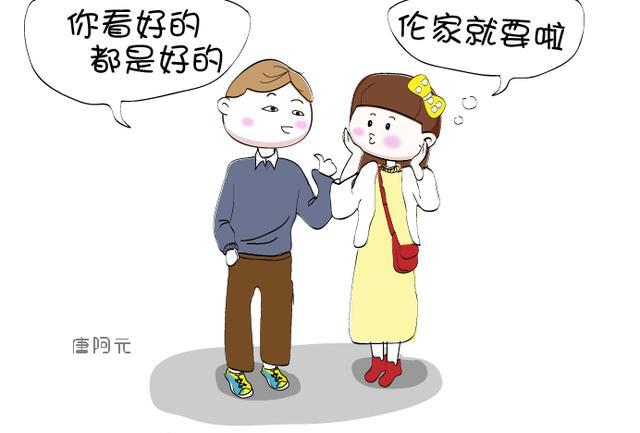
I haven’t posted in a while, because life has been super-hectic. Like I’ve been promising for a while, I have several posts in the works that I hope to bring to you soon-ish. To tide you over for now, I thought I’d try and write a post about something that I mentioned to a student the other day – how to sound ‘cutesy’ in Chinese.
That’s right – we’re going to learn a few ways that (mostly young, mostly female) Chinese people can sound ‘cutesy’. Broadly speaking, this has some overlap with a special type of speech called ‘撒娇’ ‘sājiāo’, something which has become a ‘thing’ in recent years. Essentially, it is a type of speech that many (annoying) girls use with their boyfriends and it’s something of a unique mix between cute and something between playfully annoyed and actually annoyed. The sound of 撒娇 is excessive whinging in a whiney, high-pitched, childish voice that is meant to make the guy feel somehow sorry for them and like they need to bring forth more nurture, affection and care to their girlfriend (which is the ultimate goal of the 撒娇).
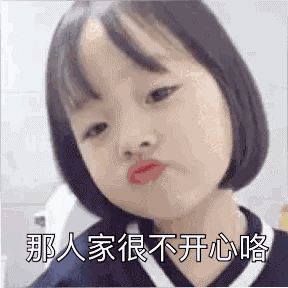
“那人家不开心咯”
撒娇 is not complete without childish hissy-fits and obligatory whacking the boyfriend on the arm (in Chinese, I’ve heard this referred to as ‘温柔的暴力’ ‘gentle/tender violence’). I believe that 撒娇 is basically meant to model the way babies get grumpy and have a mini-tantrum. Common phrases that go along with this are “你不爱我吗?” (‘Don’t you love me??’), “哎——你真是!” (‘Oh, you really are a pain~’), “我不开心了~~” (‘I’m not happpppy.’) and “我想要这个~~~~” (‘I want thiiiiis one.’ (where ‘this’ is usually some sort of cake, 奶茶 or other foodstuffs). It’s also important to pepper your speech with plentiful interjections that show disapproval, such as ‘哼’ (‘Hmph.’) and ‘切~~’ (‘Ahhh…’). The rhythm and pace of 撒娇 is like tilde (~) on crack – everything is elongated to add to the whingy character and to offset the physical violence which the boyfriend’s arm is bearing. Often, the girl’s bag will be used as a cutesy weapon here, but often, the guys who have girlfriends who tend to 撒娇 are also long-standing victims of ‘拎包’ (carrying the girl’s bag for her). They will also tend to pay for all of the girls meals, outings and even rent (if they are unusual enough to live away from home – which usually means overseas). In English, we would call these guys ‘whipped’. In Chinese, people say that this type of girl has ‘公主病’ (literally ‘princess sickness’), which alludes to a sense of entitlement they have of their boyfriend (note, that this phrase also works in Cantonese too). These couples will also have a marked tendency to walk really slowly and not in a straight line on the street, and will usually be showing some kind of not-quite-convincing affection e.g. hands in each other’s pockets, but clearly not able to walk properly; or trying to stroke each other’s heads/faces, but being obviously too forceful to be tender.
Now, if you’re wondering how you can use your Chinese language in a ‘cutesy’ way, then here are a few tips for things you can try:
1. Lots of sentence-final particles
To add to the torturous, elongated feel of 撒娇, there are copious amounts of sentence-final particles – it’s usually the ‘a’-sounding ones which are the tools for this job. They add to the sense of complaining / emotion. A lot of these ‘a’-particles below might have been taught to you as sound changes caused by the previous word followed by 啊, but actually, they each also have their own ‘personality’ too – 呀 in particular seems to be a feature of girl speech.
啊 original flavour
呀 word ending in i + 啊 → 呀 ya more feminine, expressive
哇 word ending in u + 啊 → 哇 wa more shocked, exclamatory
哪 word ending in n + 啊 → 那 na more questioning
呢 + 啊 → 哪 na
啦 了 + 啊 → 啦 la more emphatic, obvious, playful
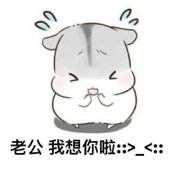
“老公 我想你了啦”
And a fairly recently appearing one:
哒 的 + 啊 → 哒 da more playful
The elongated ‘o’ sound is also common in 撒娇 and is more ‘cute’, whereas the ‘a’ sound is more ‘whingy’:
哦~~ / 喔 o 哟 yo
嘛 is another common particle used when 撒娇-ing. It’s meaning is to show explication or a moderate sense of obviousness. In the context of 撒娇, it kind of adds a feeling of ‘of course, that’s the way it is for your little princess (and you should know that, my handsome prince)’.
In an online context, these will also often be followed by tildes [~], which are used in Chinese online messaging to show the lengthening of a sound, as Chinese characters are ill-equipped for this job, unlike English, where we can show rhythm and length by using repeated letters, such as ‘Heeeeeeeeeeey!’, ‘omgggggg’.
As well as these particles, there are also question tags like the following that are often tacked onto the end of a sentence:
好吗?

e.g. 给我买这个,好吗?
        ‘Buy this one for me, okay?’
e.g. 跟我一起,好吗?
        ‘Come with me, okay?’
2. Interjections
As I mentioned above, there are several interjections that one tends to find in ‘撒娇 speech’. Firstly, there are the ones to show disapproval / playful bullying of the boyfriend:
哼
e.g. ‘哼。就这样吧。’
‘Hmph, fine then.’
切~~
e.g. ‘切~~ 你又来了。’
‘Ahhh…there you go again.’
There’s also the reluctant agreement / concession with 好吧:
好吧

e.g. BF: 今晚不去你要吃的那家了。去别的地方了。
        GF: 好吧。
The cute-flavour of 撒娇 is often enhanced with copious amounts of laughter. You may only know 哈哈 as the way to represent Chinese laughter, but there’s also these ones:
嘿嘿 heihei more playful/friendly
嘻嘻 xixi more ‘cute’, like a young schoolgirl tittering
hhh hahaha an online equivalent of 哈哈哈 (just the h’s kept from hahaha)
么么哒 (pronounced ‘mo mo da’)
This one is a recent ‘cutesy’ innovation and is often used at the end of instant/text messages. It is basically the sound of ‘kiss kiss hug’ and adds a sort of playful ‘girl power’ vibe.
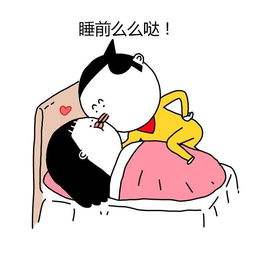
“睡前么么哒!”
Another word that falls tentatively into this category is ‘亲’. Like 么么哒 above, 亲 alludes to the sound of kissing. In fact, the word ‘to kiss’ in Chinese is 亲吻. Weirdly, this has become a term used to address people in a very friendly, light-hearted way. In particular, it is used on Taobao (China’s main online shopping site) when you instant message the owners of shops to ask questions – you start the conversation with ‘亲,你好’.
3. Pronouns
There are one or two pronoun switches that happen in the land of 撒娇. One of the most common is that girls will tend to use the pronoun ‘人家’ more often. 人家 is not exclusive to the province of 撒娇, but is pretty much used exclusively by girls/females. Although it can function as a 3rd-person pronoun (i.e. ‘him’ / ‘her’), it is often used by girls in 撒娇 to mean ‘I’ / ‘me’. Here’s an example:
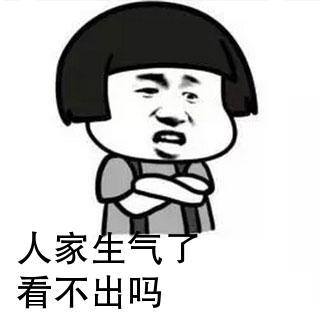
“人家生气了” ‘I’m angry.’
人家 can also be used in object position e.g. 你要多哄哄人家 ‘You need to cheer up / placate me more.’
More 撒娇-specific is the tendency for girls to refer to themselves as ‘宝宝’ ‘baby’ – particularly when expressing annoyance or some other negative emotion. This is perfectly in keeping with the whole idea that 撒娇 is mimicking how babies act when they throw a tantrum, encouraging their parents to show more love, care and affection.
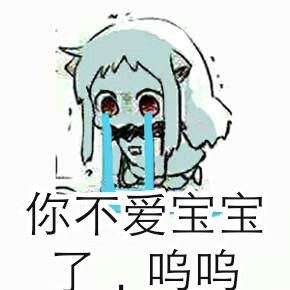
“你不爱宝宝了,呜呜”
4. Grammatical Words
There are a few grammatical words that lend themselves to the 撒娇 vibe. One example is the use of 好 for ‘very’ instead of 很. 好 is used this way in colloquial speech generally, but due to it being slightly more exclamatory than the vanilla 很, it’s well at home in the context of whinging. A very common phrase said to boyfriends is the following:
很 → 好

e.g. 你好坏!
         ‘You’re so bad!’
Some adverbs used to show sarcasm / retort are equally well-placed in the whinge-athon that is 撒娇:
又
strong dismissal of an idea with a sense that the other person is thinking something ridiculous

e.g. 你让我洗你的衣服?我又不是你老婆呀!
‘You want me to clean your clothes? I’m not your wife, you know!’
(Actually, this would more likely be said to imply that the guy should ‘do the right thing’ and take the relationship seriously, rather than insinuating that the girl feels put upon.)
又 is also used when blaming / admonishing, such as you can see in the following image found online:
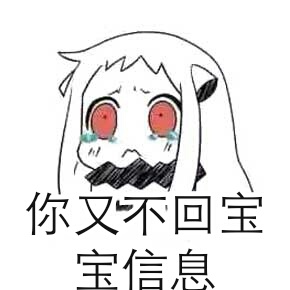
“你又不回宝宝信息”
‘And you don’t even return your little precious’ (my) messages!’
才        reversal back onto the other person

e.g. 我笨吗??你才是!
‘Me stupid?? No, that’s you!’
才…呢  dismissing / deflecting

e.g. 说我懒?我才不是呢。
‘You’re calling me lazy? I’m not lazy.’
5. Phrases / Content
We’ve already seen the following common types of things to say whilst 撒娇-ing:
你不爱我吗? ‘Don’t you love me??
哎——你真是! ‘Oh, you really are a pain~’
不开心了~~ ‘I’m not happpppy.’
我想要这个~~~~ ‘I want thiiiiis one.’ (often food-related)
你好坏! ‘You’re so bad!’
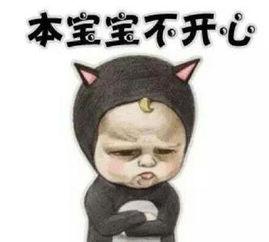
“本宝宝不开心”
Here are a few more for your mental collection:
你都不哄哄我一? ‘You’re not even gonna try and cheer me up?’
人家不要嘛~ ‘I don’t want it!’
不要了啦~ ‘I don’t want it!’
[note the unusual ‘double 了’ (i.e. 了 + 啦(=了 + 啊) – it comes from Taiwan originally]
气死我了! ‘You make me furious!’
我才不要啦~ ‘No, I don’t want it!’
你不够疼我呀~ ‘You don’t love me enough.’
A common feature of 撒娇-ese is to phrase what you really mean as though you don’t mean it. For example, if a girl is feeling jealous and wants to express this to her boyfriend she might say:
我可没在嫉妒哦。 literally: ‘I’m definitely not being envious.’
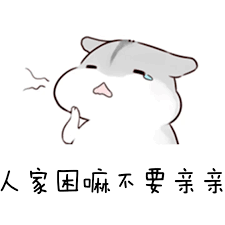
“人家困嘛 不要亲亲”
‘I’m sleepy…I don’t want a kiss.’
(She probably does! Though, always check first…)
6. Adjectives
To be a 撒娇 princess, you need to use the right lingo. Things are not ‘interesting’, ‘unique’, ‘unconventional’ or ‘soft’ – they are all unequivocally ‘可爱’. People aren’t ‘deep’, ‘considerate’, ‘kind’ or ‘gentle’ – they are all ‘萌’ méng (apparently, this comes from Japanese). Heavy leaning on a few fairly vacuous words isn’t all that different from how we imagine the stereotypical air-head in English-speaking contexts – using the same few words over and over again until nausea afflicts all those within hearing distance.
Likewise, everything your 男朋友 does – far from being ‘frustrating’, ‘irritating’, ‘vexing’, ‘anxiety-provoking’ or ‘concerning’ – is simply ‘讨厌~’ ‘So annoying!’.

“讨厌”
7. ‘Cutesy’ Alternates of Words
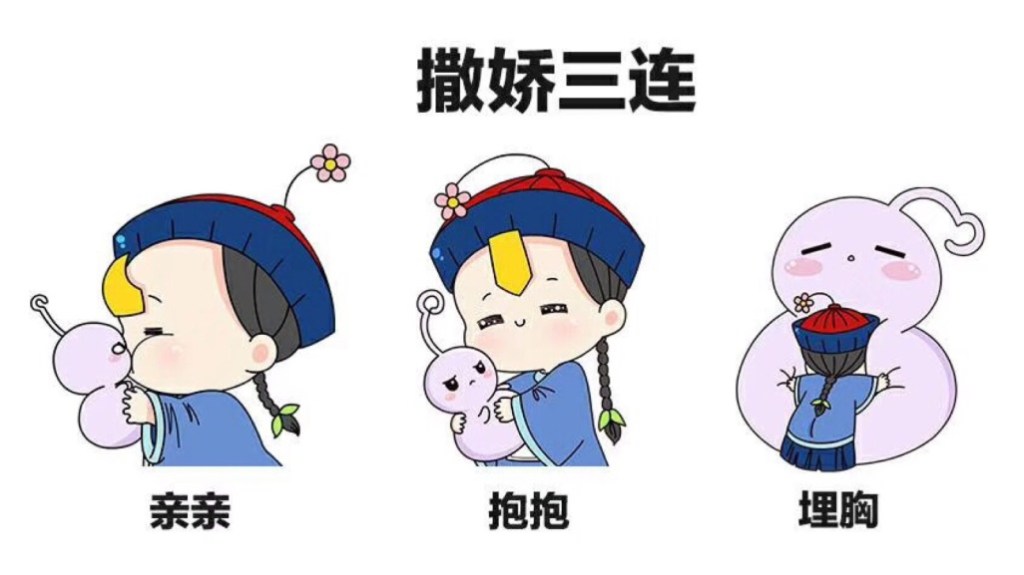
“撒娇三连” ‘The 3 Stages of 撒娇’
‘kiss kiss, hug hug, buried in chest’
There are some ‘cutesy’ equivalents of certain words, and you’ll find that nearly all of them use the grammatical technique of reduplication to ‘cute-ify’ them. There’s a tendency to use the reduplicated form of verbs (which is a legitimate grammatical phenomenon that softens the tone), but also to generalise this to some nouns and certain other phrases. Here’s a few examples for you:
[normal verb reduplication]
要抱抱! ‘I want some huggy-wuggies!’
你哄哄我吧。 ‘You should try and cheer me up.’
[extended uses]
东东 the cute equivalent of ‘东西’ e.g. 什么东东? ‘What thingy?’
这里好棒棒哦。 ‘It’s sooo awesome here.’
人家困困了啦~ ‘I’m so sleepy-weepy.’
该吃饭饭了。 ‘It’s time for some foodies.’
我要睡觉觉啦~ ‘It’s time for me to go sleepies.’
In fact, even the word 撒娇 itself can itself be reduplicated as ‘撒娇娇’!
Here’s one I found online:
(a girl when ordering in a restaurant)
人家不要吃肉肉嘛… ‘No meaties for me…’
Below is an image that came up whilst searching online for 撒娇-related images. Note that it’s the doubling of the words that is the name of the game here:

“要亲亲 要抱抱 要举高高”
There’s also some other ‘cutesey’ variants of words e.g.
墨尔本 Mò’ěrběn ‘Melbourne’ → 猫本 Māoběn ‘Melb-y’
(mostly cute because of the switch to ‘猫’ ‘cat’)
猫 māo ‘cat’ → 猫咪 māomī / 喵咪 miāomī ‘kitty cat’
妈妈 māma ‘mum’ → 妈咪 māmī ‘mummy’
8. Alternate ‘Cutesy’ Pronunciations
Finally, there is also a ‘撒娇’ / ‘cutesy’ kind of pronunciation that is characteristic of the style. Usually, this is unexpected to learners, as Chinese is not a language where it’s easy to modify (and show in writing that you have modified) pronunciations of words. To get around this, there are some common, well-known character substitutions that take place and which sound like the alternate, ‘cute’ pronunciations when read aloud.
fei → hui
e.g. 飞机 → 灰机
e.g. 非常 → 灰常
Sometimes the character substitution online changes the meaning but not the sound, or is the same sound but for the tone; the main purpose of these substitutions is to give a more funny or cute language style. For instance:
超级困了 Chāojí kùn le ‘I’m super tired.’ → 炒鸡困了 Chǎojī kùn le
(literally: ‘I’m stir-fried chicken sleepy.’
A Taiwanese-like Mandarin accent has become very popular and ‘hip’ in recent years. One of its main features is to really soften the /sh/, /zh/, /ch/ and /r/ sounds so that they almost sound like /s/, /z/, /c/ and a softer r-sound instead. A common word where this softening of /sh/ occurs is 为什么 (also note the cuter ‘o’ sound used for the pronunciation of the 么 – helped by the fact that there is an alternate form of 什么 used in Cantonese / Southern Chinese, which is 什麼 shénmo):
为什么 wèishénme → wèisénmóooo
Another ‘cutesy’ sound change is to add the ‘o’ sound to other words (and to change the character to the nearest-sounding word, accordingly) e.g.
可以 kěyǐ → 阔以 kuóyǐ
可怕 kěpà → 阔怕 kuǒpà
Here’s another common variant pronunciation that occurs by adding the cuter ‘o’ sound; this one is used very often online and in instant-messaging:
没有 méi-yǒu → 木有 mù-yǒu
有没有 yǒu-méi-yǒu → 有木有 yǒu-mù-yǒu
Sometimes, L-sounds are used to substitute R-sounds. For instance, I’ve seen the following example (you’ll notice that it’s in the first picture in this article):
人家 rénjiā → 伦家 lúnjiā
Finally, there are also some common sound blends that are often represented in both casual speech and in online messaging. These are also very common additions to 撒娇 speech:
这样 zhè-yàng → 酱 jiàng
不要 bú-yào → 表 biǎo
Go with knowledge!
Now that you have the feel of ‘撒娇’ firmly in your minds, check out some of the following phrases, all very characteristic of the 撒娇 style. And remember, always use this knowledge wisely! Until next time~!
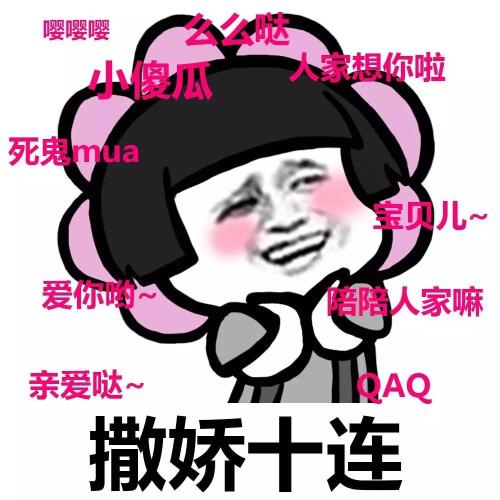
“撒娇十连” ’10 Steps to 撒娇’
[*Note*: All images are sourced from online and I make no claim to their copyright.
All copyright rests with their original owners.]
 中文秘诀 | The Secret of Chinese