
A quick fun fact for the day. There is actually NO evidence whatsoever (at least, the last time I read about this) that 10,000 steps is what humans should be striving to achieve each day in terms of exercise.
The number was mentioned once in a paper by a Japanese researcher in passing and somehow it just stuck. You may not have realised until I pointed it out, but 10,000 is a very round Japanese/Chinese number. Unlike in English, where bigger numbers are counted in groupings of thousands, and then millions (i.e. ‘thousands of thousands’), Chinese and Japanese have no numerical unit for ‘million’ and instead you have to say ‘hundreds of 10 thousands’. What’s actually happening here is that whereas we break up numerical places into groups of three i.e.:
1,000 = thousand
1,000,000 = million
1,000,000,000 = billion
1,000,000,000,000 = trillion
Chinese/Japanese break up digits into groups of four e.g. for Chinese:
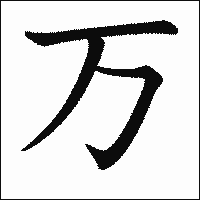
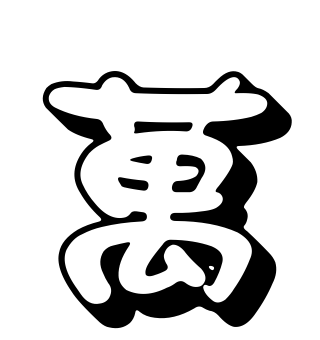
万 1,0000 = 10 thousand
亿 1,0000,0000 = 10 million
兆 1,0000,0000,0000 = 1 trillion [finally, they line up with our number system!]
So when our Japanese researcher suggests something like ‘10 thousand steps a day’, it’s rather vague and a deliberate choice of a round, ‘idealised’ amount, rather like in English when we say things like “I want to be a millionaire” – why a ‘millionaire’? Why not a ‘tens of millionaire’? Undoubtedly, it’s the language we speak shaping our perception of what an idealised goal of having ‘a lot’ of something is – bear in mind that because of currency conversion rates, a ‘millionaire’ in one country is by no means as rich as a ‘millionaire’ in another – it’s just a round, idealised form of expression that does not necessarily correspond to an actual value.
This idea of ’10,000’ referring generically to the notion of ‘a lot’ comes through in various Chinese phrases:
万事如意
’10 thousand wishes as you desire’ (the ubiquitous New Year’s greeting – is it really wishes you 10 thousand wishes, or just a large abundance of wishes?)
成千上万 ‘tonnes, large amount of’
千千万万 ‘innumerable’
One of my favourite Chinese phrases is:
不怕一万,只怕万一
‘I’m not afraid of anything, just the 1 in 10 thousand.’
This phrase is a bit of a pun, playing off the reversal of 一万 ’10 thousand’ into the conjunction 万一 ‘what if … (usually something unlikely) were to happen?’. Again, this notion of 10 thousand being a place-holder for the unknowable or something so high in quantity or possibility that it might as well be infinite for all intents and purposes.
Moral of the story – exercise as much as you can, but do it in an amount that works for you and your body, not because linguistic determinism told you to.
 中文秘诀 | The Secret of Chinese